


How to grow savoy cabbage
In May, I harvest my first savoy cabbages. I grow savoy cabbage that matures in the polytunnel several months before the cabbages in the outdoor beds are ready. Keep reading to learn how!
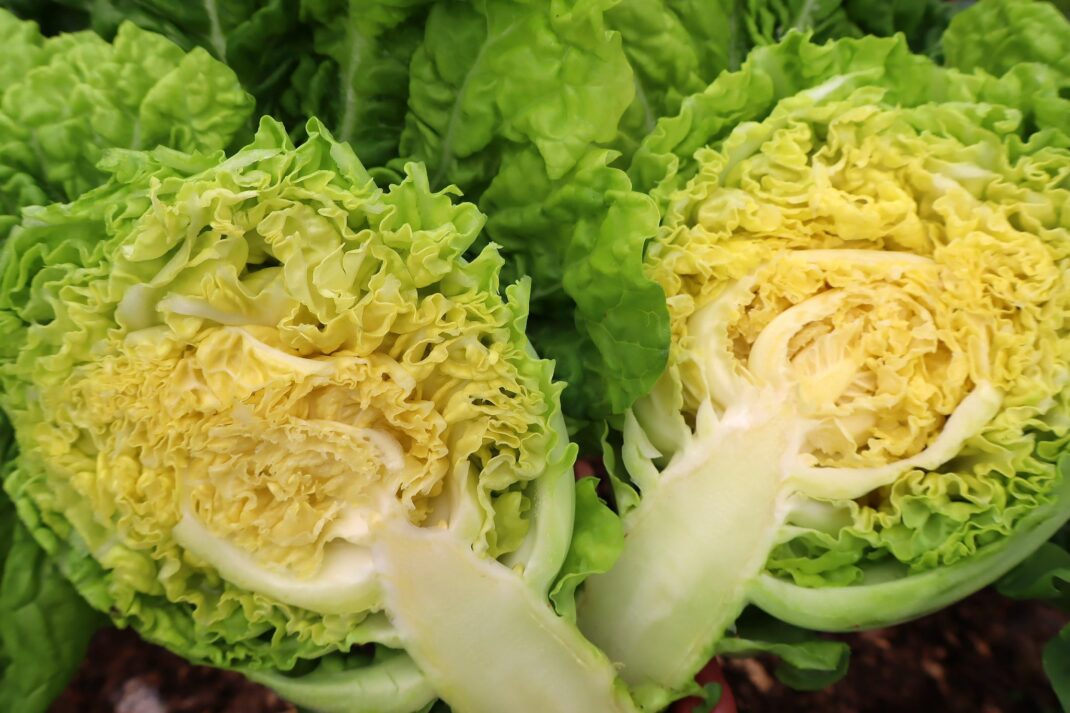
These cabbage heads have thicker outer leaves, and more tender ones in the middle and down the stem. I grow savoy cabbage every year. Try it!
Can a cabbage be fast growing? Yes, absolutely. It is fascinating to see how differently plants develop, even within the same species. This is especially noticeable among heading cabbages. Some plants are still in the early stage of head formation while others have already formed firm, harvest-ready heads.
Understanding this makes it easier to plan for a long harvest season. The first vegetables of the year are often early-maturing varieties. Later in the season, the longer-growing types are ready. Even in a regular home garden, it makes sense to combine early and late varieties to make the most of your growing area. Early varieties have a shorter growing period in the beds outside, which often means less exposure to pests and fewer challenges when it comes to general care.
Read more about cabbage: Delicious savoy cabbage stew
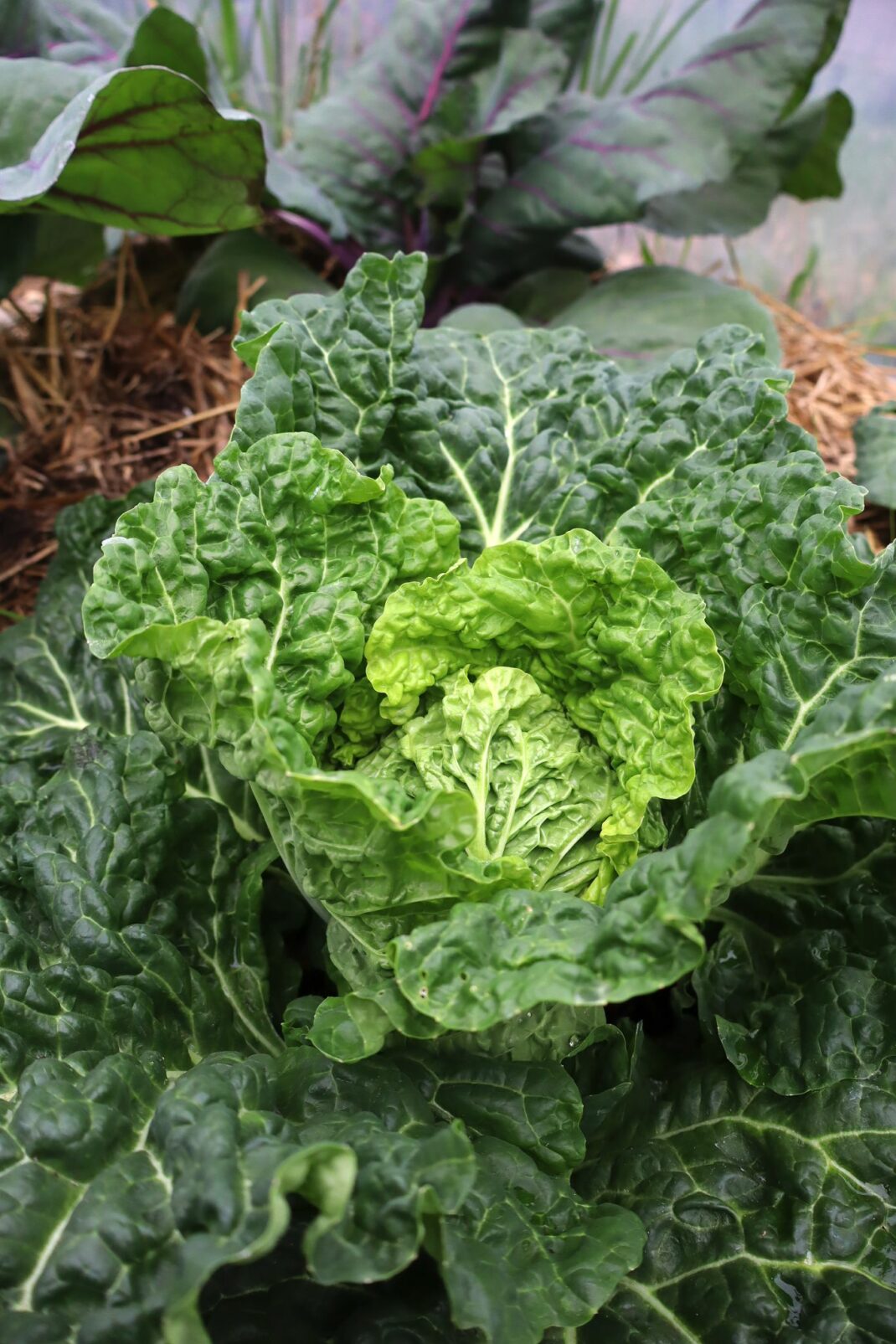
Savoy cabbage leaves are so beatiful and there are plenty of varieties to choose from.
I usually grow savoy cabbage early in my polytunnel to secure a harvest already in May (I live in northern Europe). This year the very early variety ‘Alcosa’ was the first to mature. It produces small, compact heads and performs well even in cool conditions. The plants in the photo were sown indoors in January, transplanted into an unheated greenhouse in February.
Read more about growing cabbage: How to grow pointed cabbage
What is savoy cabbage?
Savoy cabbage belongs to Brassica oleracea, a species that includes white cabbage, red cabbage, kale and several other crops. Savoy is classified as a heading cabbage. From a small, round seed develops a plant that eventually forms a compact head surrounded by large outer leaves.
These outer leaves are often thicker and more fibrous than the inner leaves. In early days however, even the outer leaves can be surprisingly tender and suitable for cooking.
The defining characteristic of savoy cabbage is the bumpy leaf texture. All leaves are heavily crinkled and almost looks like they were quilted. The outer leaves are dark green, while the inner leaves become progressively lighter toward the center of the head. So pretty!
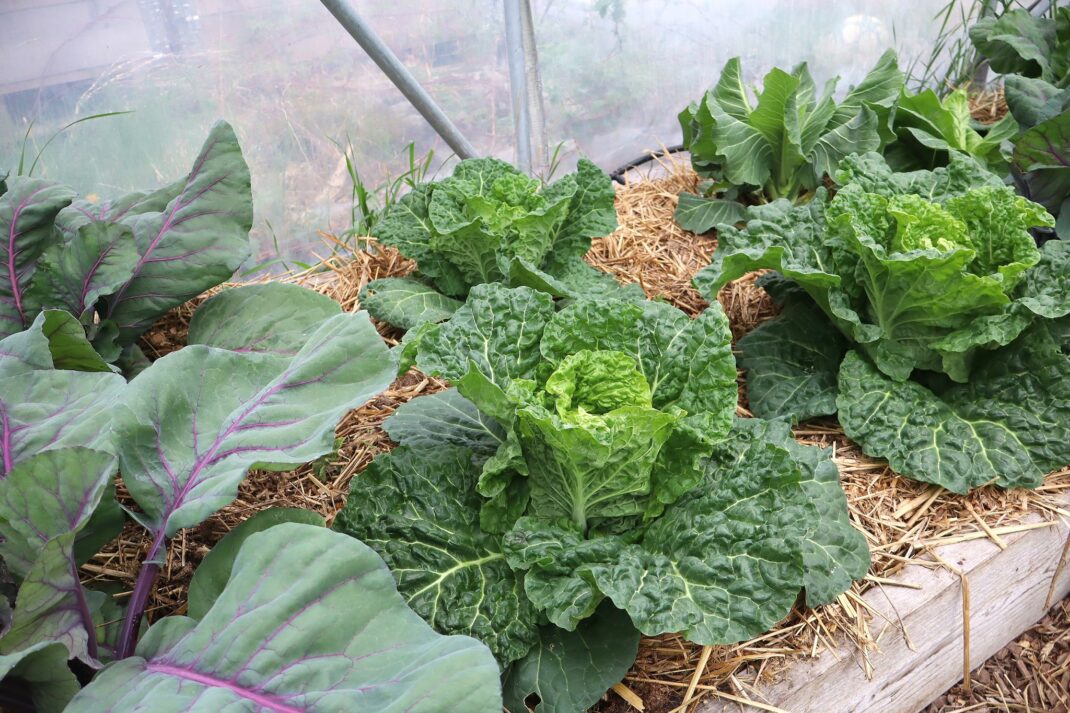
I grow savoy cabbage early in the polytunnel.
Like all brassicas, savoy cabbage needs a lot of nutrients to thrive. I sow the seeds in trays and separate the seedlings into individual pots once they have developed their first true leaves. After about six to eight weeks, the plants are ready to be transplanted to their final spot. The soil should already be well fertilized and I also add compost or mulch during the season. Consistent watering is essential. The large leaf mass requires steady moisture for proper development, and water also supports nutrient uptake.
In my experience, savoy cabbage tends to suffer less pest damage than standard white cabbage. This is particularly true for early crops grown in spring when pest pressure is still low. In my polytunnel during spring 2025 I observed only minor caterpillar damage on a single head. No slug damage and no significant cabbage worm issues.
Read more about cabbage: Steamed cabbage salad
Some savoy varieties mature especially early. The earliest varieties are typically ready for harvest about three months after sowing. Under optimal growing conditions, ‘Alcosa’ can mature in approximately 71 days. Another early favorite of mine is ‘Vorbote 3’, which produces slightly larger heads.
For autumn and winter harvests, choose later cultivars or sow early types later in the season. ‘January King’ is an excellent late type with slightly purple, crinkled leaves. ‘San Michele’ has similar characteristics. ‘Vertus 2’ is a reliable all-round variety suitable for both early and later sowings. All three store well in cool conditions, which makes them perfect for a longer harvesting season as well as long-term storage.
Read more about cabbage: How to grow napa cabbage
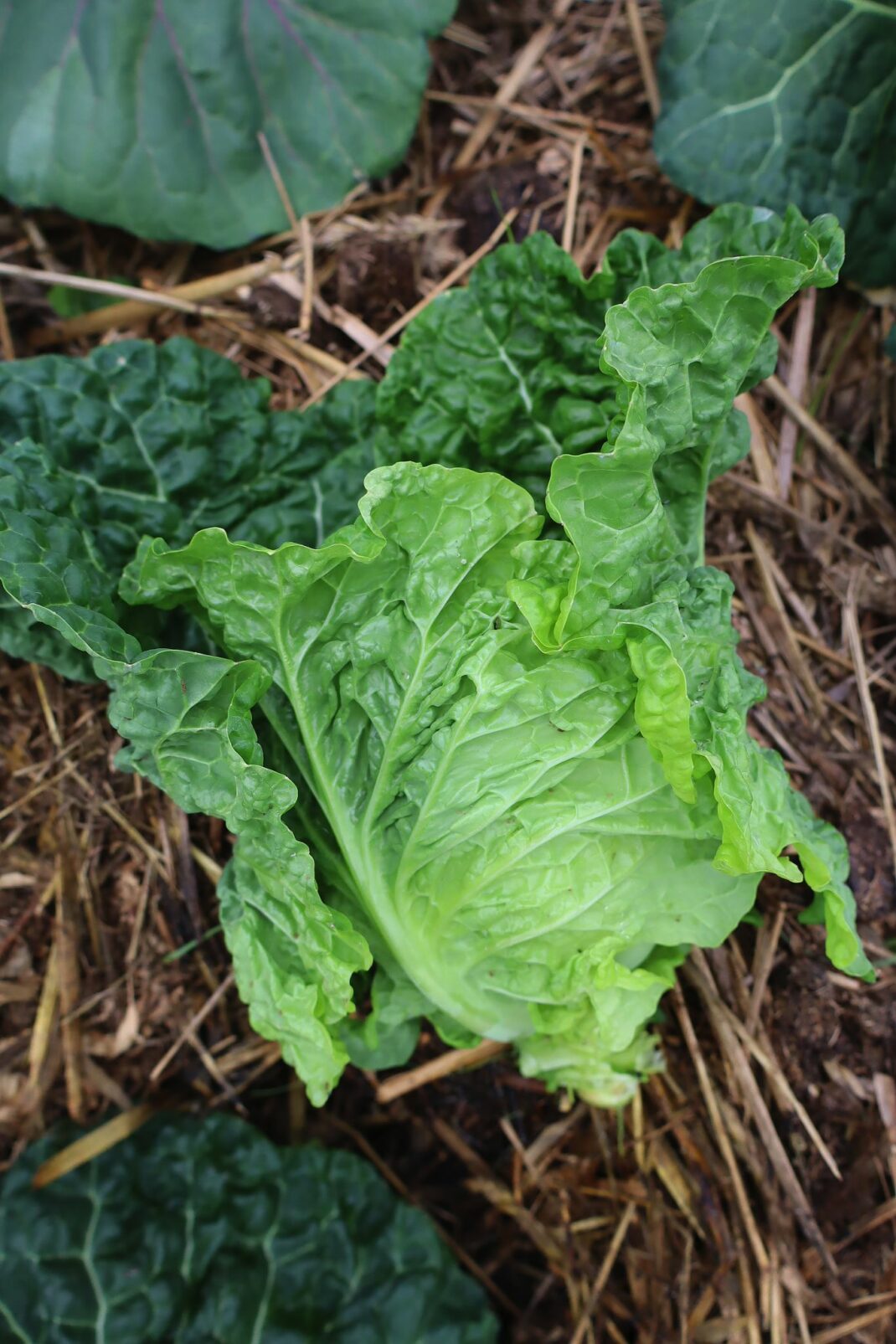
I usually remove the outer leaves when I harvest my cabbage heads. But they can be used in your dishes too depending on how thick they are.
How to use savoy cabbage?
Savoy cabbage is one of the most versatile brassicas in the kitchen. Early in the season it provides substantial yields that make satisfying meals.
It can be eaten raw or cooked and is also suitable for fermentation, much like white cabbage.
We use savoy cabbage in many ways:
• finely shredded in fresh salads
• for cabbage rolls or baked cabbage dishes
• grilled
• oven roasted
• sautéed in wedges
• braised
• creamed
• as a thinly sliced cabbage salad
• added to stews
• as filling in savory pies
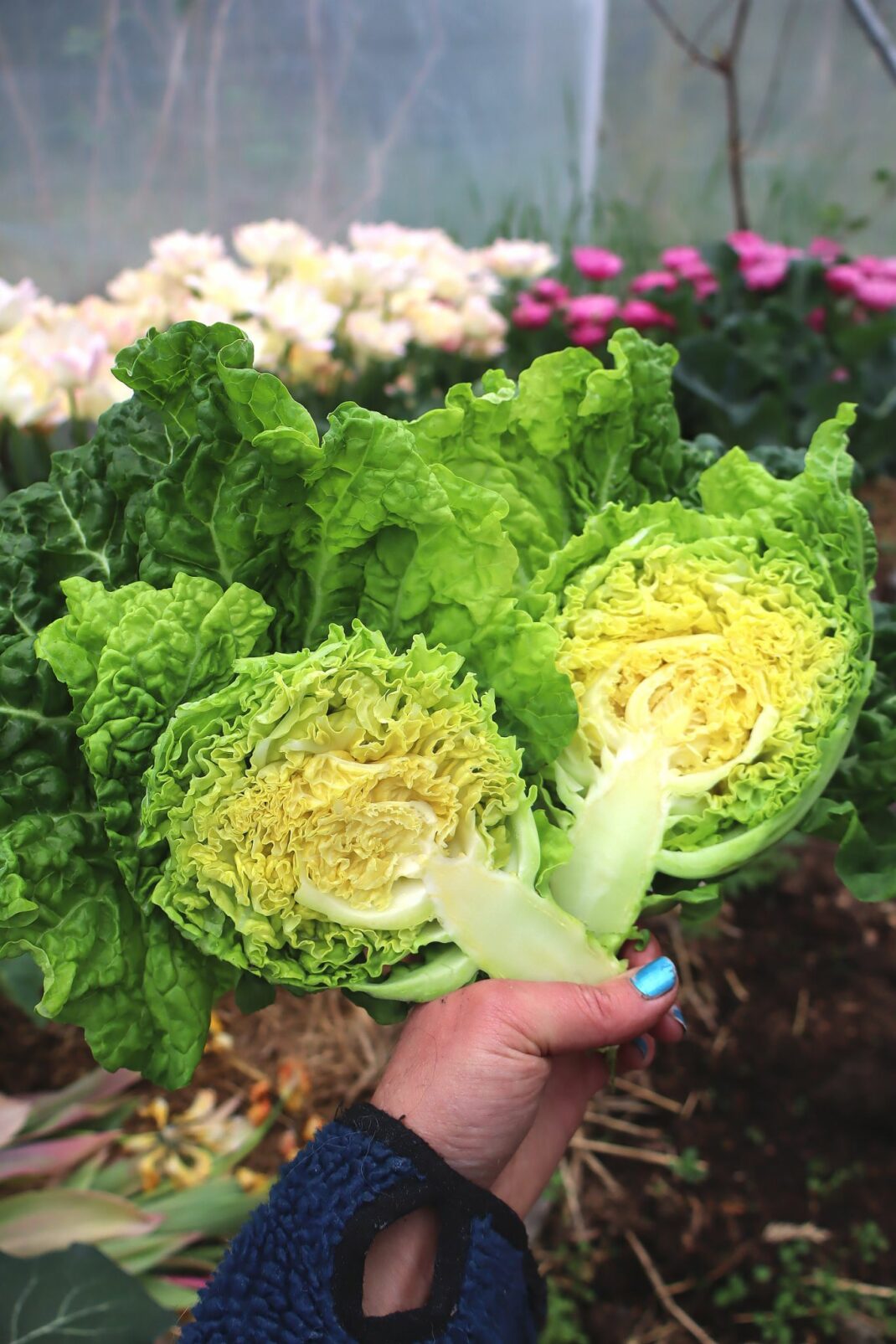
You can use all parts of the cabbage, even the stem. Just remember to peel it before you eat though, the outer layer is quite hard.
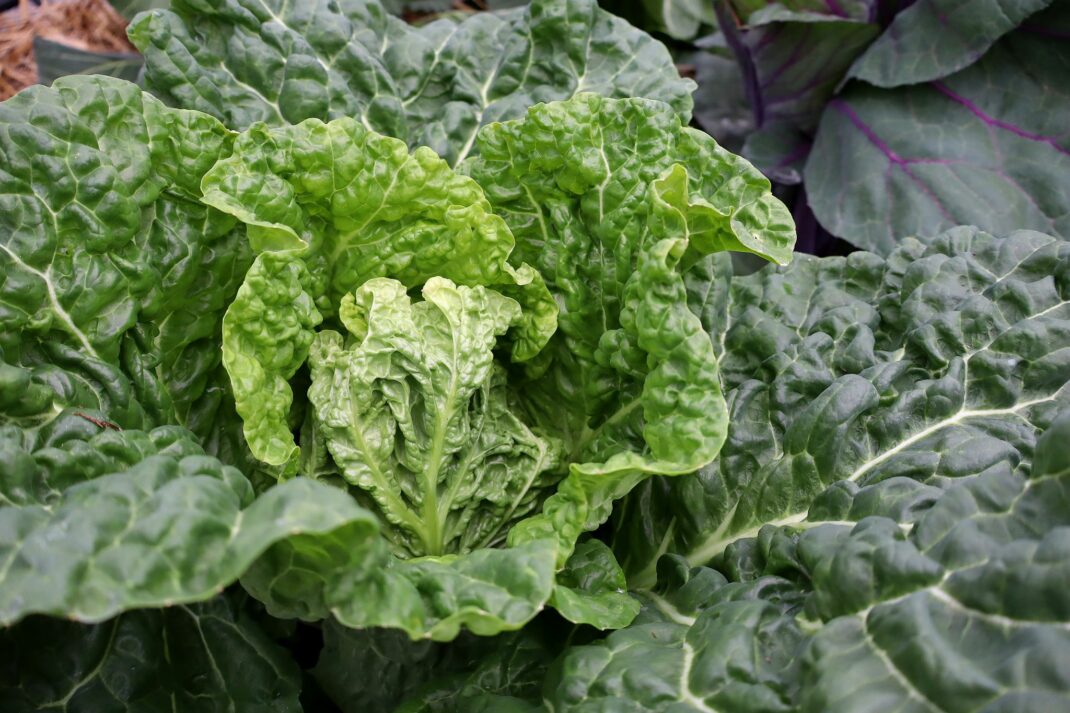
Can you imagine that one single seed can produce such large plats. Cabbage is so beautiful and tasty!
More about growing vegetables: Follow me on YouTube
As I’m writing this, we are still in early spring. The light is returning and many of us are longing to get started in the garden. If you are thinking about savoy cabbage, now is a perfect time to sow.
Early varieties can be started indoors and grown on for planting in the greenhouse or in a sheltered spot outdoors later in spring. Sow the seeds in trays, prick out the seedlings into their own pots once they have developed true leaves, and grow them on in good light. When the soil has warmed and can be worked, plant them out in well-prepared, fertile beds. Savoy is a hungry crop, so make sure the soil is rich in nutrients from the start.
In our family, we are looking forward to the first crisp heads from the early greenhouse planting. Few things feel as hopeful as watching those sturdy little cabbage plants settle into the soil, knowing they will provide generous harvests ahead.
Good luck with your cabbage.
Sara Bäckmo


Leave a Reply
You must be logged in to post a comment.