


How to Freeze Sourdough Starter
Don't worry about your sourdough starter going bad. Freeze it in small jars, and you'll always have some ready to revive whenever you feel like baking.

Did you know that you can freeze sourdough starter in jars?
I just made a new sourdough starter for my fall baking projects! My old starter had seen better days after going a little too long without being fed. And since some of my readers have been asking how to get started with sourdough baking, it seemed like the perfect time to make a fresh batch.
Read more: Homemade pumpkin bread
If you don't bake very often, sourdough bread can seem a little complicated. After all, you need a sourdough starter, and that starter needs looking after. It needs to be fed every now and then to keep the yeast alive and happy, ready to get to work in your next batch of bread dough. I usually keep a small amount of starter in a jar in the refrigerator.
As long as you bake with it about once a week, there isn't much else you need to do. But if you leave it for several weeks without baking, you'll need to feed it with flour and water at least once or twice a week. Otherwise, the starter can go bad.
A sourdough starter that is active and well cared for can actually last for decades. Isn't that amazing?
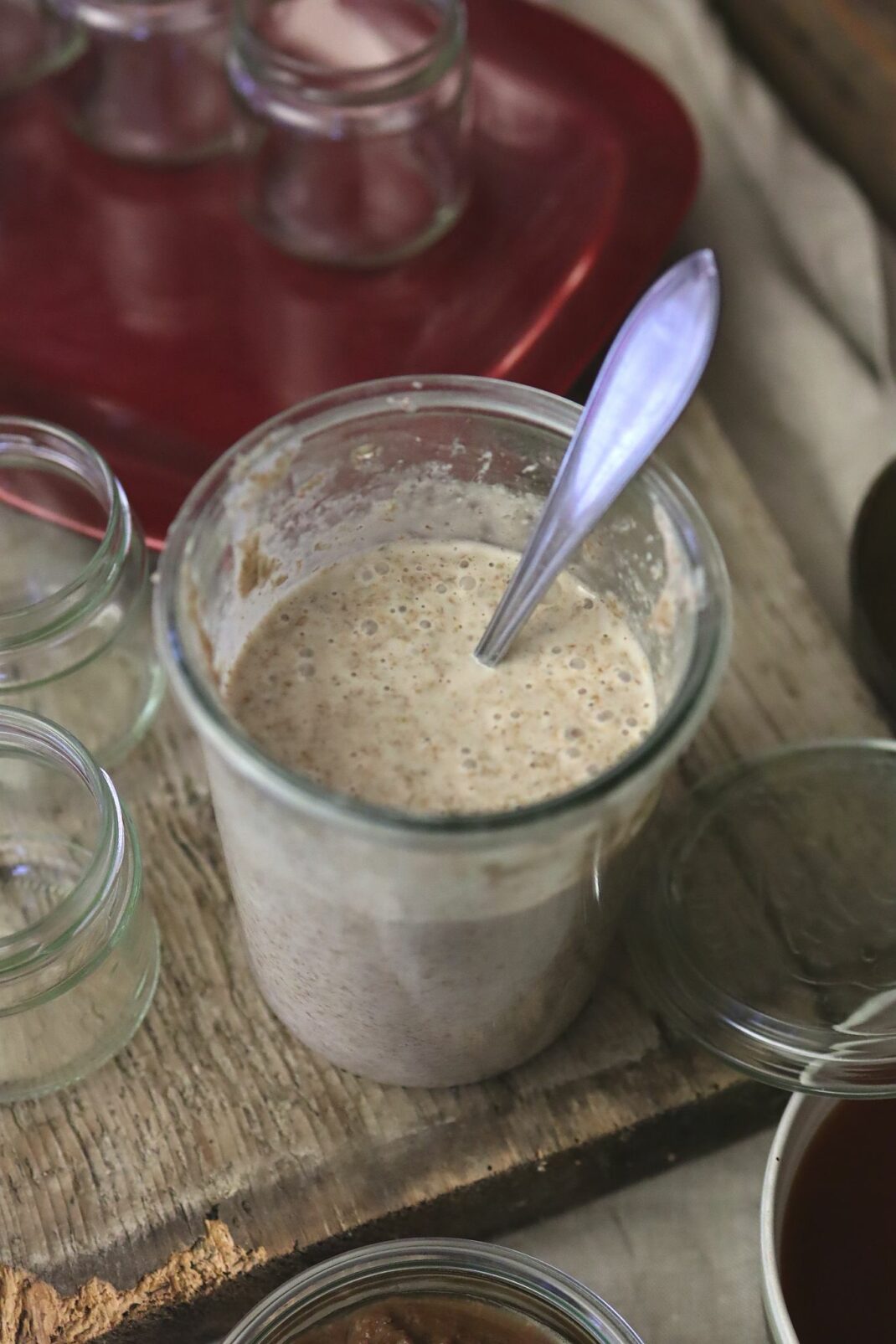
The sourdough starter is ready. You can use it for baking, keep it in the refrigerator or freeze it for later.
Saving sourdough starter
For forgetful people like me, who sometimes forget about that little jar in the refrigerator and neglect to feed it, things can get a bit disappointing when it's finally time to bake bread again.
Especially when you discover that your lovely sourdough starter has turned into a gray, smelly mess!
But there's a simple trick. You can freeze sourdough starter! Here's how.
Freeze sourdough starter in jars
I like freezing my sourdough starter in glass jars. It's practical, and I think the jars look lovely too. I can take one straight out of the freezer and get the starter going again right in the jar. And of course, I don't need to use quite as much plastic in my kitchen either.
I divide the starter between the jars, leaving plenty of room at the top for it to expand. Then I place the jars on a tray in the freezer, with the lids resting loosely on top rather than screwed on tightly.
Once the starter has frozen, I tighten the lids.
I do this afterward to reduce the risk of the jars cracking when the starter expands as it starts to freeze.
If you're unsure about using glass jars in the freezer, you can always freeze your starter in plastic containers, ice cube trays or freezer bags instead.
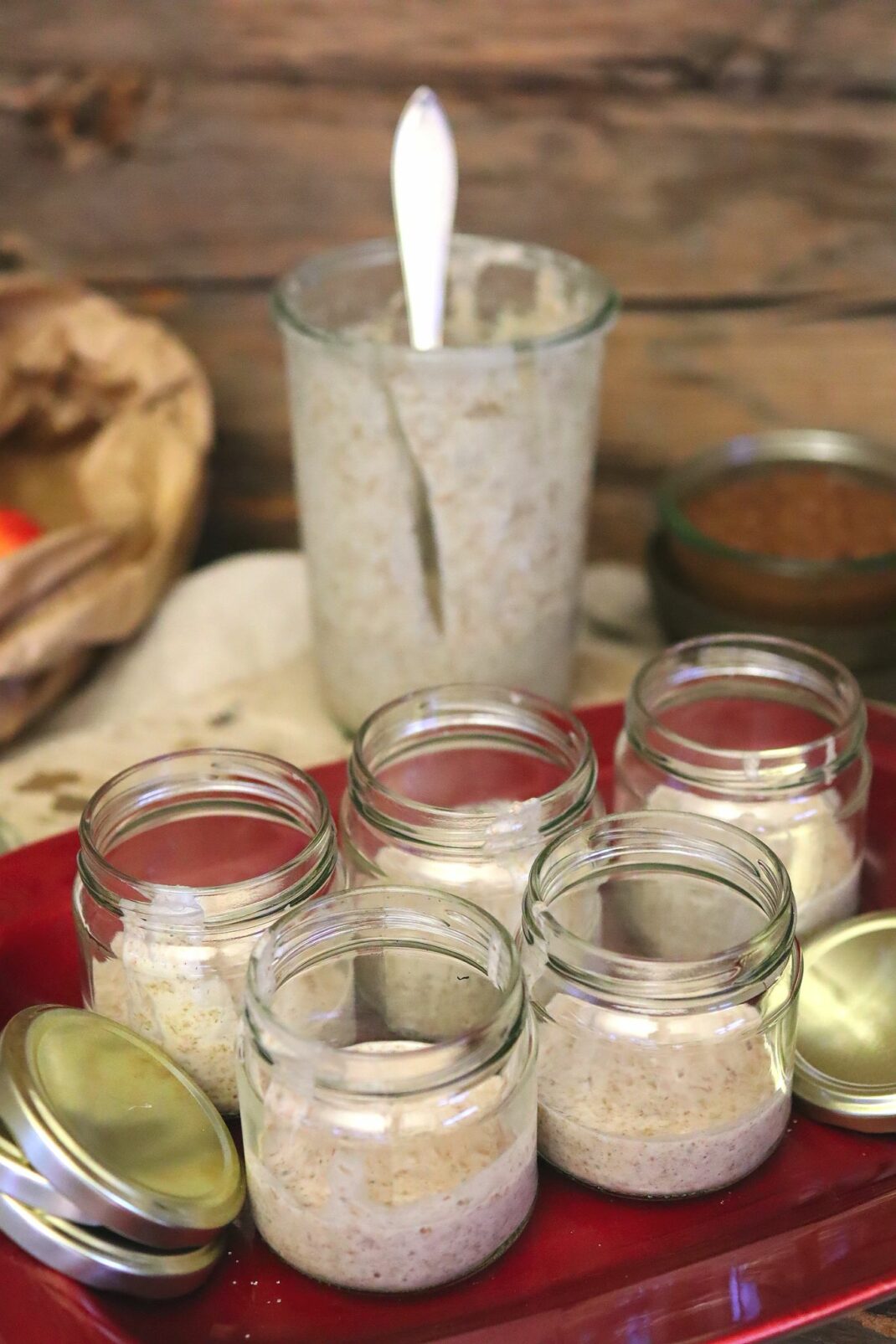
Glass jars are perfect for thawing the starter and feeding it with a little flour and water. After a few hours in a warm spot, the starter can begin bubbling again.
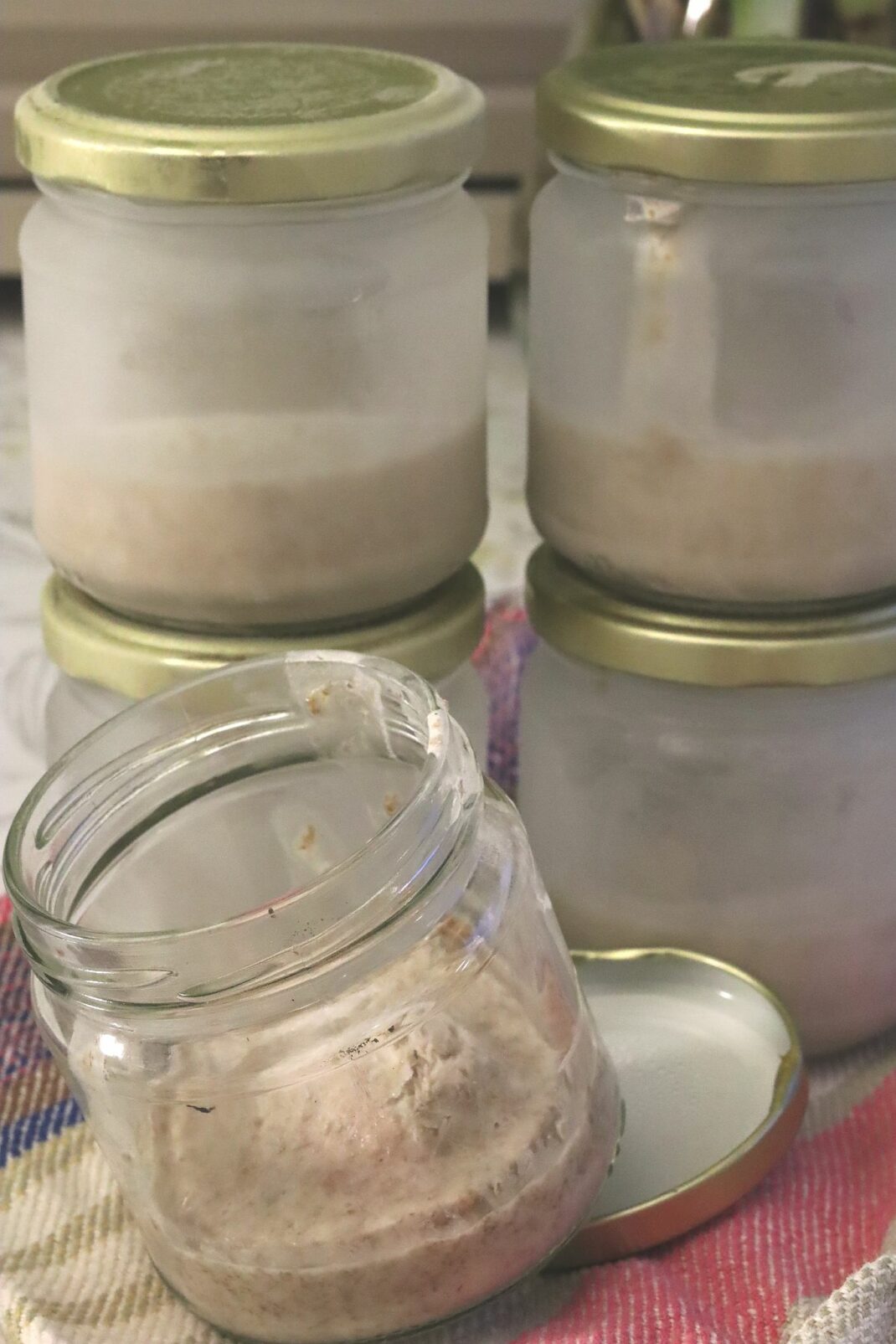
Frozen sourdough starter looks a little strange, but it thaws nicely and starts bubbling again once it's active.
Thaw and use
When I'm ready to bake sourdough bread again, I simply take a small jar of starter out of the freezer.
I let it thaw at room temperature, mix in a little flour and water, and leave it until the starter begins to bubble.
The easiest way to get it going again is to keep it somewhere warm.
If you live in an older and slightly drafty house like we do, you might need to get a little creative. A room with heated floors, a warm utility room or even a counter above a running dishwasher or washing machine can be a good place to store it.
Sourdough starter with raisin yeast
If you feel like experimenting and making something a little extra special, I recommend trying raisin yeast, also known as wild yeast water, in your sourdough baking.
Many of us who grow our own food have dried berries and fruit tucked away in the pantry. When you use them to make wild yeast water, they can give your bread a really lovely flavor.
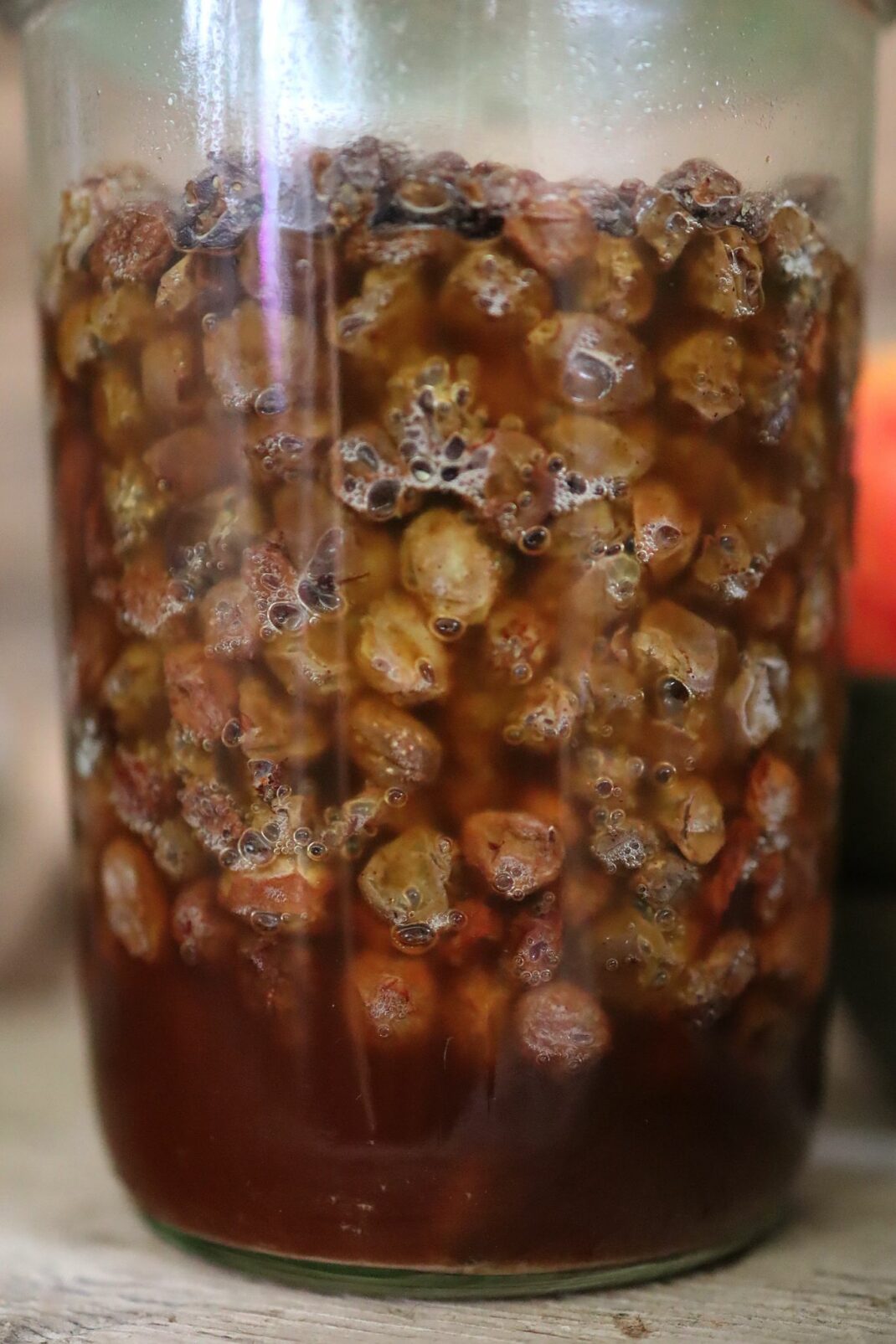
Raisin yeast water is made by soaking raisins in water and letting them ferment. You can use other dried fruits and berries too.
Read more: Sweet bread with fruit and seeds
Living Food
The other day, I came home from work to find that my daughter had cleaned out the refrigerator. What a lovely surprise for her mom! My husband told me that she'd been bringing him one jar after another, asking if she could throw them away.
"No, no, no!" my husband Philip had said. "You never know if it's some forgotten old mess or something Sara has been working on for six months. Better leave it!"
And that's exactly how it is. Our refrigerator is full of jars containing everything from sourdough starter and kefir grains to fermented vegetables and mushroom mycelium. Living food! Although I can see why all those jars might look a little suspicious sometimes.
I really enjoy working with sourdough. When I have the time, I love making starters with different kinds of flour and experimenting with wild yeast water. I keep them going and use them to bake all sorts of bread. And just like the vegetables I grow have their own character depending on the variety, the flour you use makes a real difference to your sourdough bread too.
A hearty, rustic rye bread is just as delicious as a light and airy wheat loaf, but they're completely different.
Give it a try!
/Sara Bäckmo
20. November 2026

Leave a Reply
You must be logged in to post a comment.