


Freezing Food in Glass Jars
Can you freeze food in glass jars? Absolutely! Glass jars work well in the freezer and are a handy way to store food in smaller portions without using plastic. Here’s how I do it.
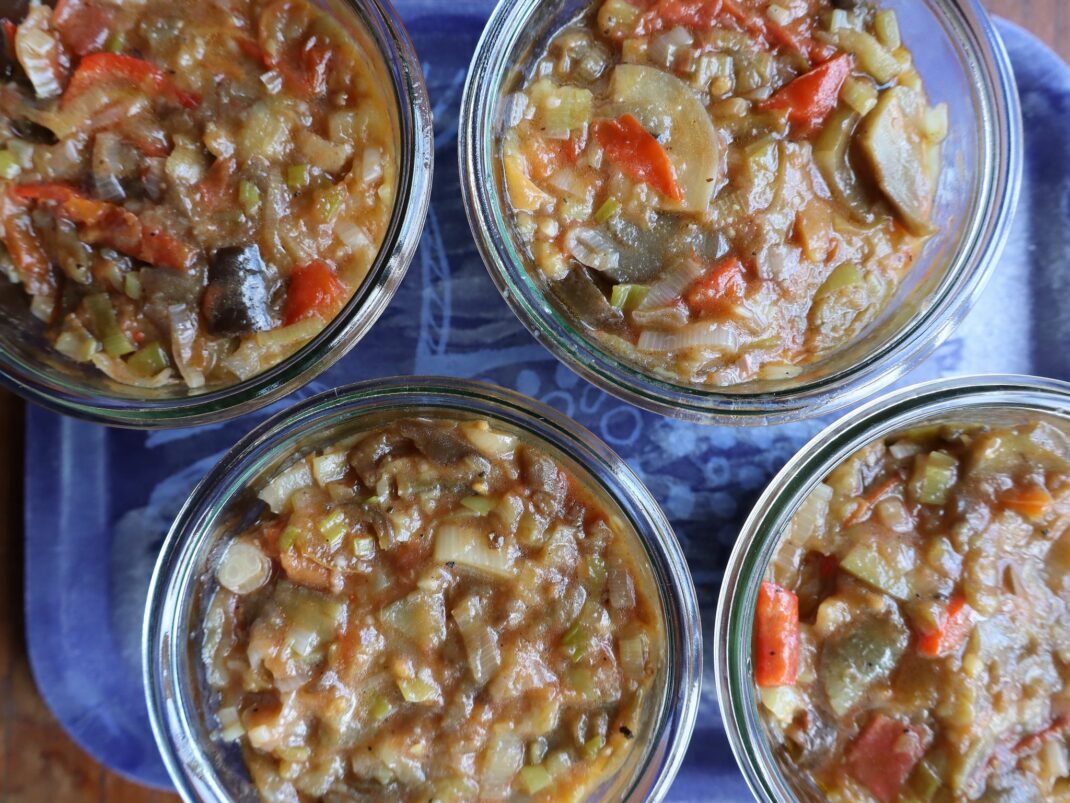
Freezing food in glass jars is both practical and convenient. It is a great way to reuse jars you already have and cut down on plastic in your everyday life. Try it!
When the garden is overflowing with vegetables during harvest season, I like to get as much produce as possible into the freezer. I use quite a few glass jars for freezing food. In my experience, glass keeps the smell of the food contained better than plastic does.
I also like being able to take a nice glass jar straight from the freezer and put it on the table once the food has thawed, instead of transferring everything to another container before serving. And of course, I appreciate not having to use quite as many plastic bags and other plastic containers, that can be difficult to reuse.
I have received several questions about how I freeze food in glass jars, so I thought I would show you how I do it. I hope this answers some of your questions!
Read more: How to freeze tomatoes
What Kind of Jars Can I Use?
You can use all kinds of glass jars, both reused and new ones. The important thing is that the jar is intact and has a lid that fits properly.
Just make sure the jar is clean. I don't usually sterilize jars before freezing food in them. I simply wash the jars and lids as I normally would.
For freezing, I think reused jars are perfect! Odd jars that might be difficult to use for other purposes can work really well here. The lids don't need to meet the same standards as they would for canning or preserving food, so it is useful to save a collection of jars specifically for the freezer.
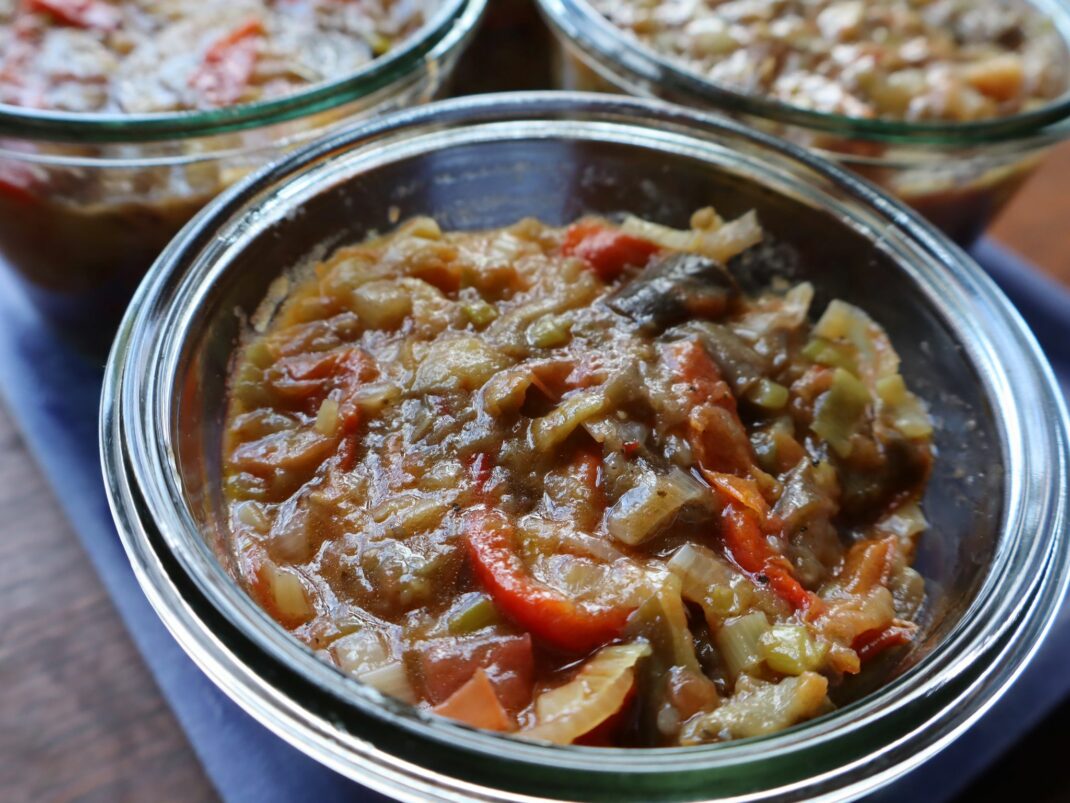
I don't fill the jars all the way to the top. I leave some room for the contents to expand as they freeze. My eggplant spread contains eggplant, tomatoes, bell peppers, leeks, garlic and some seasoning. Yum!
Preparing the Food
The food you want to freeze should not be hot. If you have cooked something, let it cool first, just as you would when freezing food in any other type of container.
To save space in the jar, you can cut the food into smaller pieces or blend it, if that works for what you are freezing.
Glass jars are also great for individual portions of leftovers. Just take a jar out of the freezer, let it thaw and eat straight from the jar if you have chosen a suitable size. Again, make sure the food has cooled before putting it in the freezer! This helps prevent the temperature of the food already stored in the freezer from rising.
How to Freeze Food in Glass Jars
Fill the jar with food, but leave a few inches of space at the top of the jar. The contents need room to expand as they freeze, otherwise the pressure may cause the jar to crack, which we really don't want of course.
I usually fill the jars and freeze them for a few hours without the lids, or with the lids only very loosely attached. This gives the contents room to expand with time. Once everything is frozen all the way through, I put the lids on properly.
That's really all there is to it!
Some of my favorite things to freeze in glass jars are:
- eggplant spread in small jars
- fruit sauces for desserts, ice cream and baking
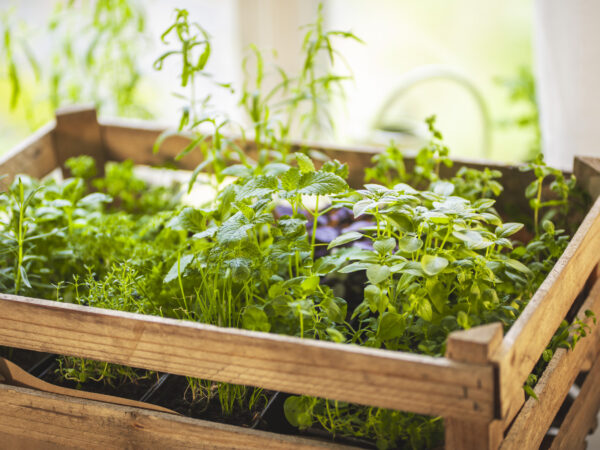
- herbs such as dill, parsley, basil and oregano
- mushrooms
- individual portions of leftovers for lunch
- mashed fruit or vegetables, jam and marmalade
- juice
- broth
Glass jars do take up some extra space in the freezer of course, but I still like using them for practical reasons. I especially like freezing herbs in glass jars because the glass helps keep strong aromas contained and preserved properly.
Dill and other strongly scented herbs can sometimes give off aromas that affect other foods in the freezer. I find this can happen quite easily when freezing them in plastic bags or plastic containers.
When I want to use something from a glass jar, I simply take it out of the freezer and let it thaw on the counter or in the refrigerator. So convenient!
Read more: How to freeze soy beans
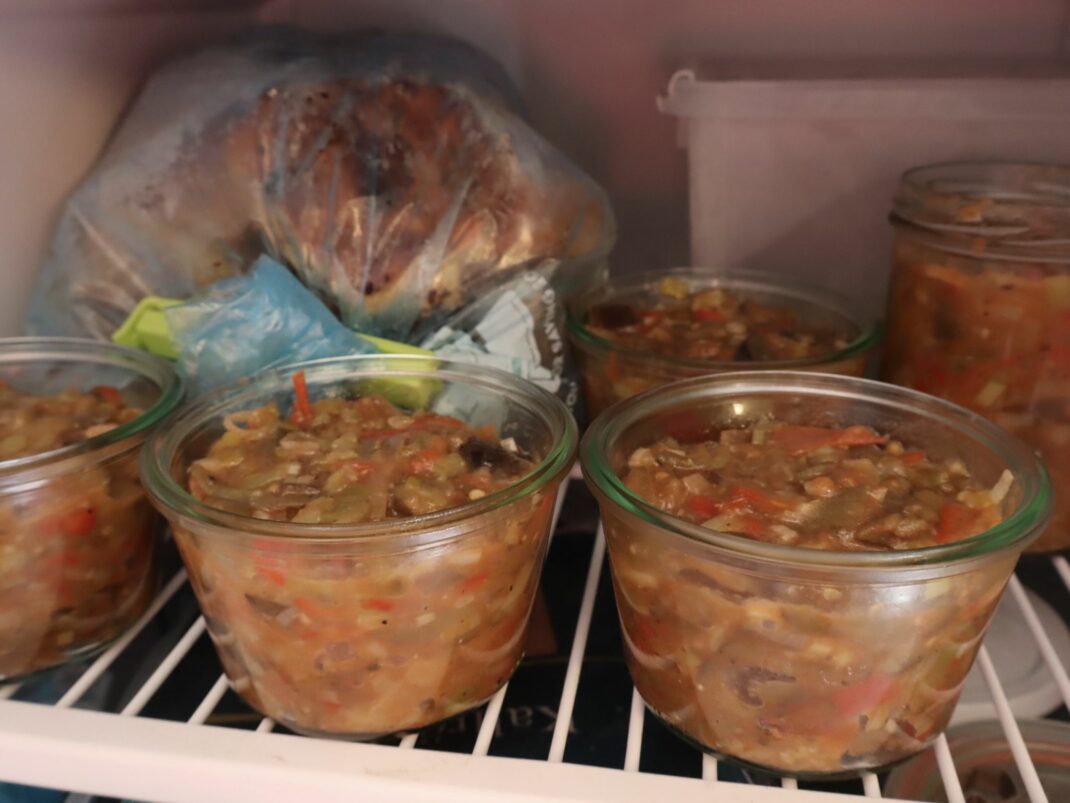
I place the jars in the freezer, sometimes with a lid or a towel resting loosely on top for protection. Once the contents have frozen a few hours later, I put the lids on properly.
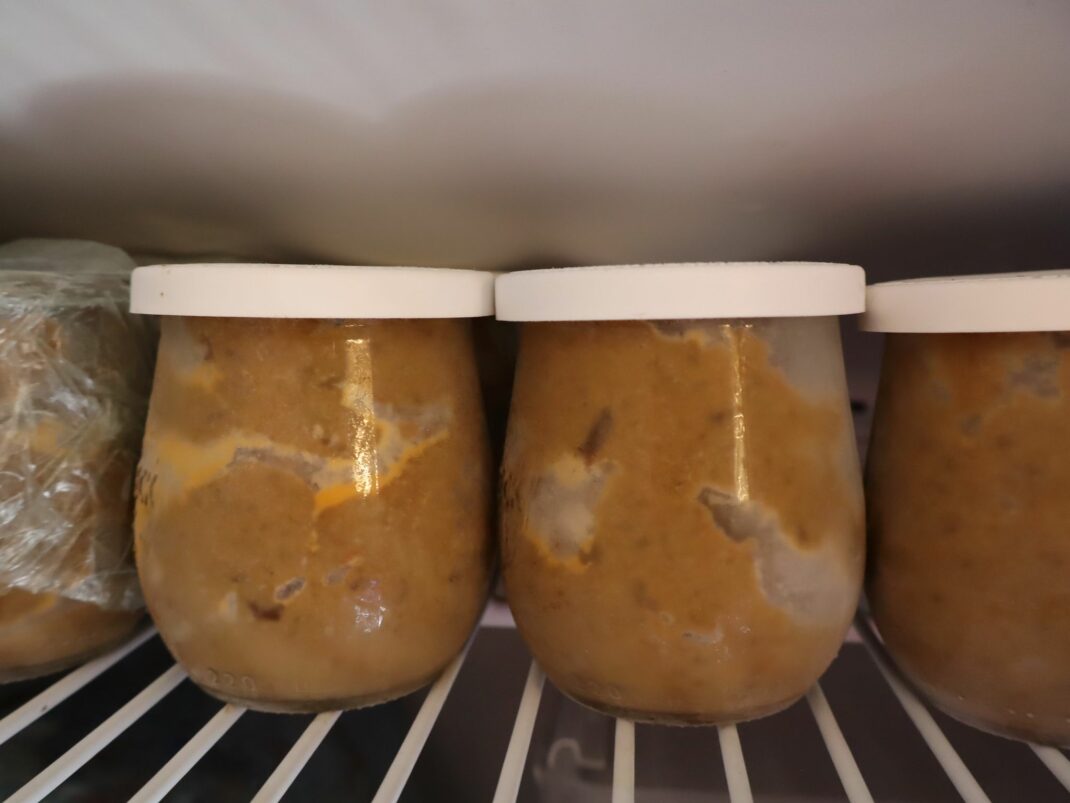
This is the same type of eggplant spread, but blended and frozen in convenient individual portions. I can take a jar out, thaw it in the refrigerator and eat the spread for breakfast on a sandwich. A simple way to store food without preserving it in another way.
Things to avoid
- putting hot food in the freezer
- filling the jars all the way to the top
- tightening the lids firmly before the contents have frozen
The jars I use in this post are Weck jars. They are sturdy glass jars with matching lids, originally designed for water-bath canning. On this occasion, I made a huge batch of eggplant spread for stews, sandwiches and toasted sandwiches, and decided to freeze it in the smaller jars. Each one holds just about the right amount for a smaller meal for my family.
The jars can also be used with temporary plastic lids, and these are the ones I use for the jars in my freezer.
The smaller jars with the brown spread contain the same eggplant mixture, only blended. It is one of my favorite toppings for freshly baked bread, preferably toasted, with a little butter or oil, fresh vegetables and herbs. Yum!
/Sara Bäckmo
25. September 2026

Leave a Reply
You must be logged in to post a comment.