


Growing vegetables in dry conditions
This post contains affiliate links. We may earn a commission at no cost to you.
Hot and dry weather can be challenging for a vegetable garden, but there are several ways to help crops cope. Here are six practical tips for growing vegetables in dry conditions.
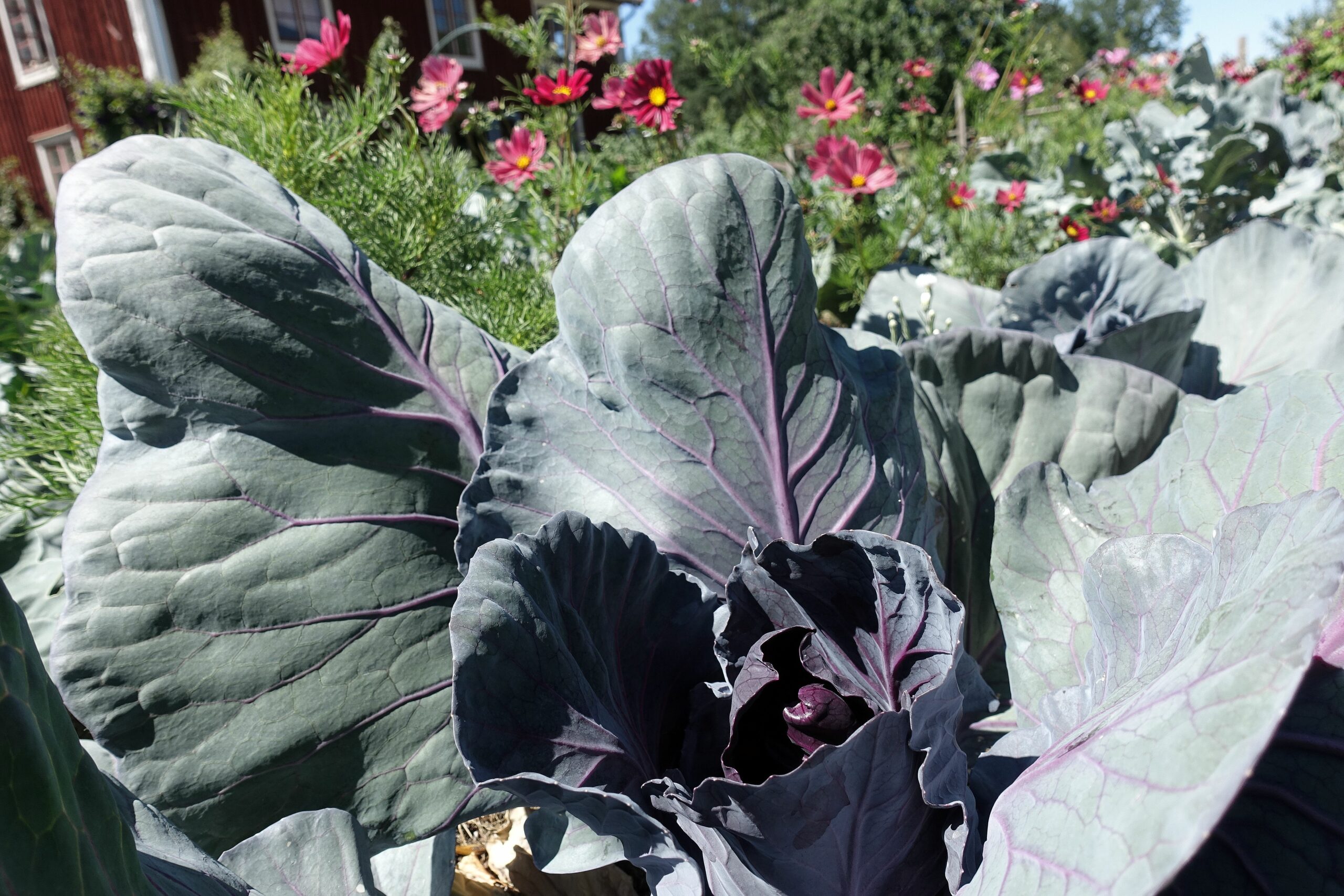
My cabbages are thriving in beds covered with plenty of mulch, which will help keep the water in the soil. This is a sweetheart cabbage variety called Kalibos.
Long periods of hot, dry weather can make even established plants struggle. Some exposed parts of the garden may dry out so quickly that vegetables have difficulty growing. A few simple changes can help protect the soil and make better use of the water available.
Along with protecting the soil and watering carefully, choosing varieties that handle heat well can make a difference. SeedsNow has a collection of vegetables and herbs selected for their tolerance of high temperatures.
Browse the heat-tolerant varieties here: Heat-tolerant seeds
Here are my six best tips for helping the garden cope with dry conditions and improving the chances of a good harvest:
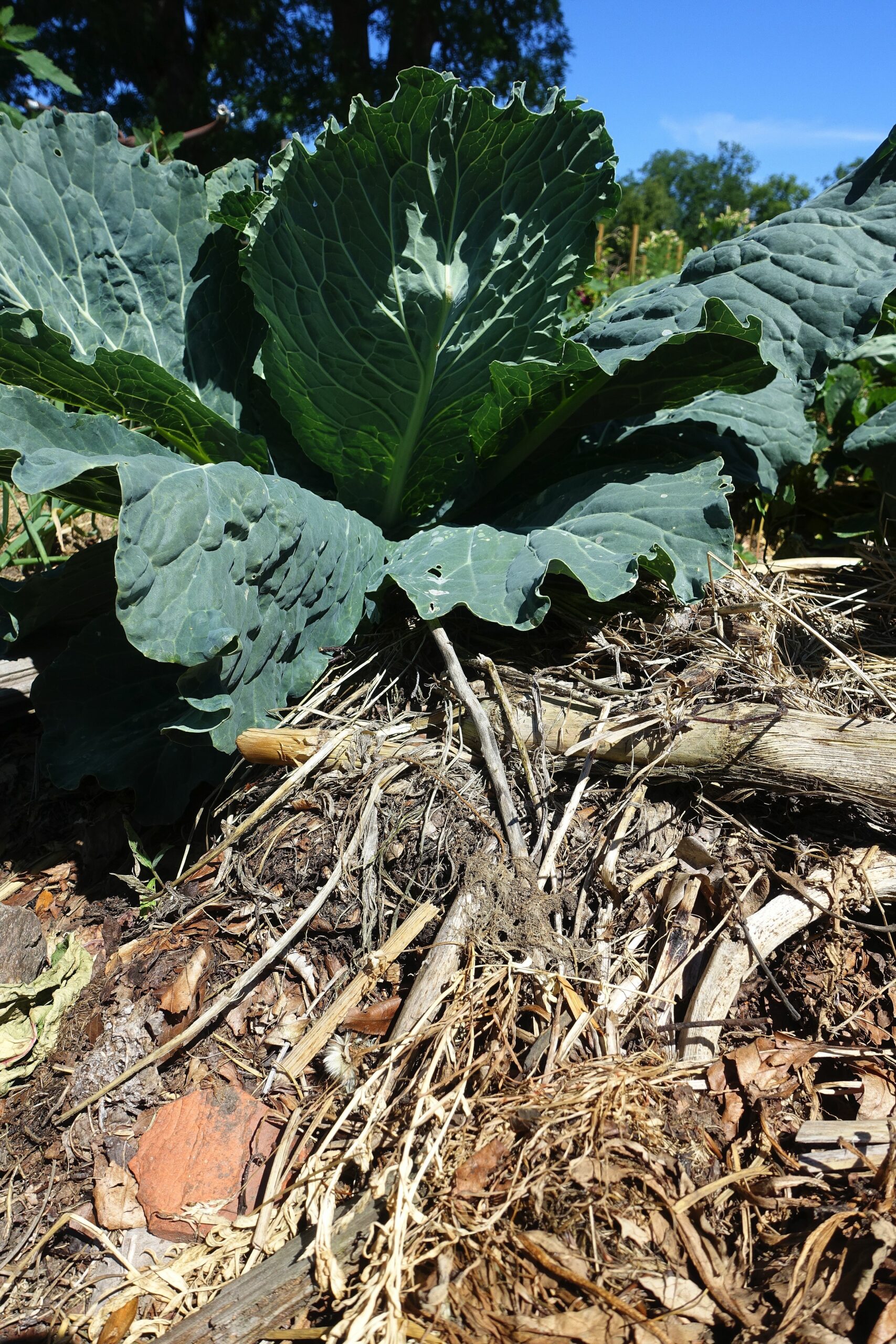
Mulching means to simply put plant parts like old grass clippings and leaves on top of the soil around your plants. I'm growing savoy cabbages here.
1. Mulch!
This might just be the most important thing you can do when you're growing vegetables in dry conditions. Put the mulch on top of the soil between the plants, make sure the layer is around four inches thick. You can use old grass clippings, leaves or any plant parts you might have around. The mulch helps prevent moisture from evaporating and gradually breaks down, adding organic matter to the soil around the vegetables. This will help the vegetables survive those horrible dry spells.

I'm using grass clippings as mulch around my asparagus and a heirloom variety of turnip that people used to grow after forest fires here in Scandinavia.
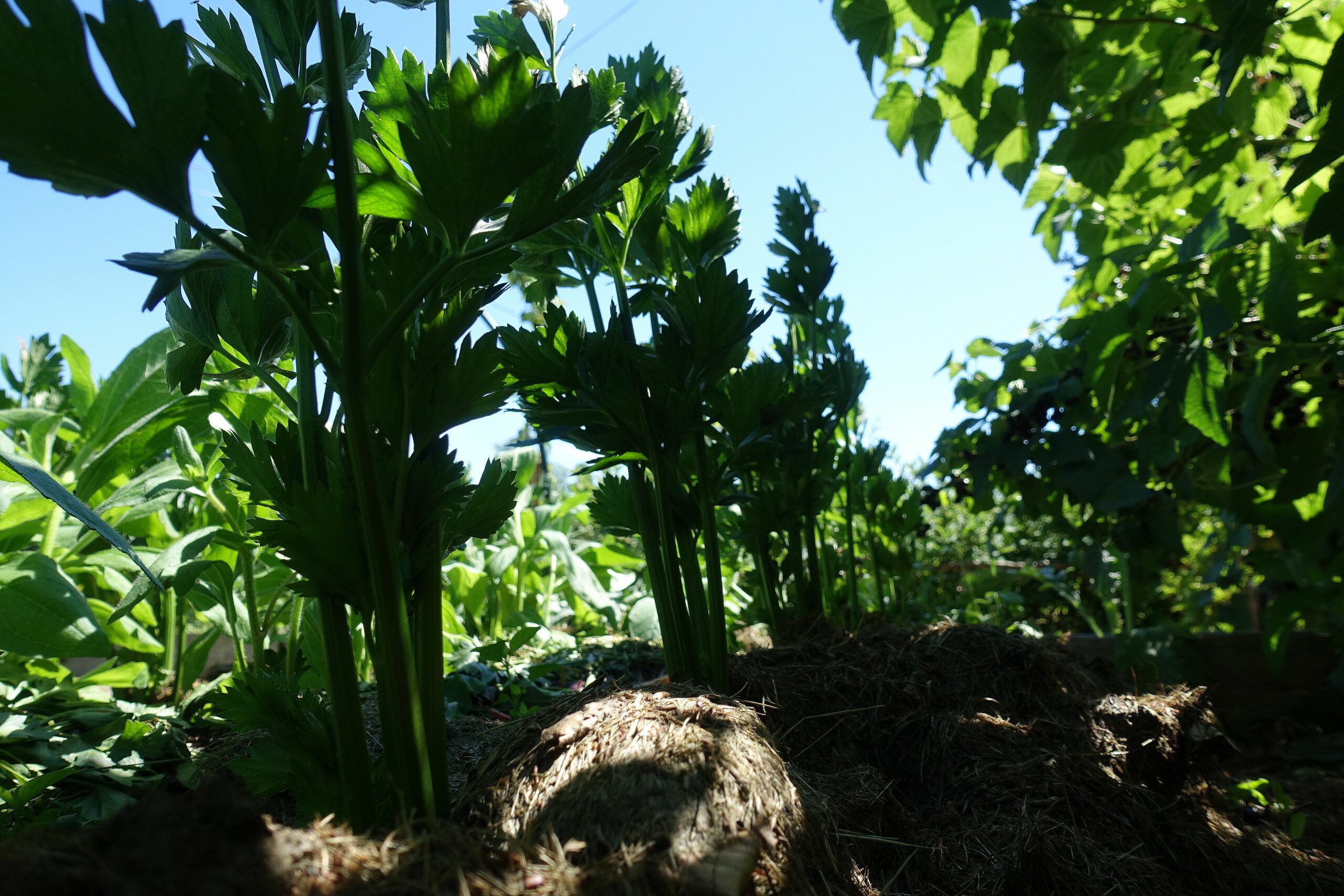
The root celery thrives underneath my currant bushes, a layer of mulch is the trick!
2. Grow in the shade
You can grow plenty of leafy greens in shady spots. The soil stays nice and moist here and you can start sowing lettuce, parsley and beets here in summer to get a nice harvest of little leaves.Dill, some cabbages and Swiss chard can thrive in shady spots too.
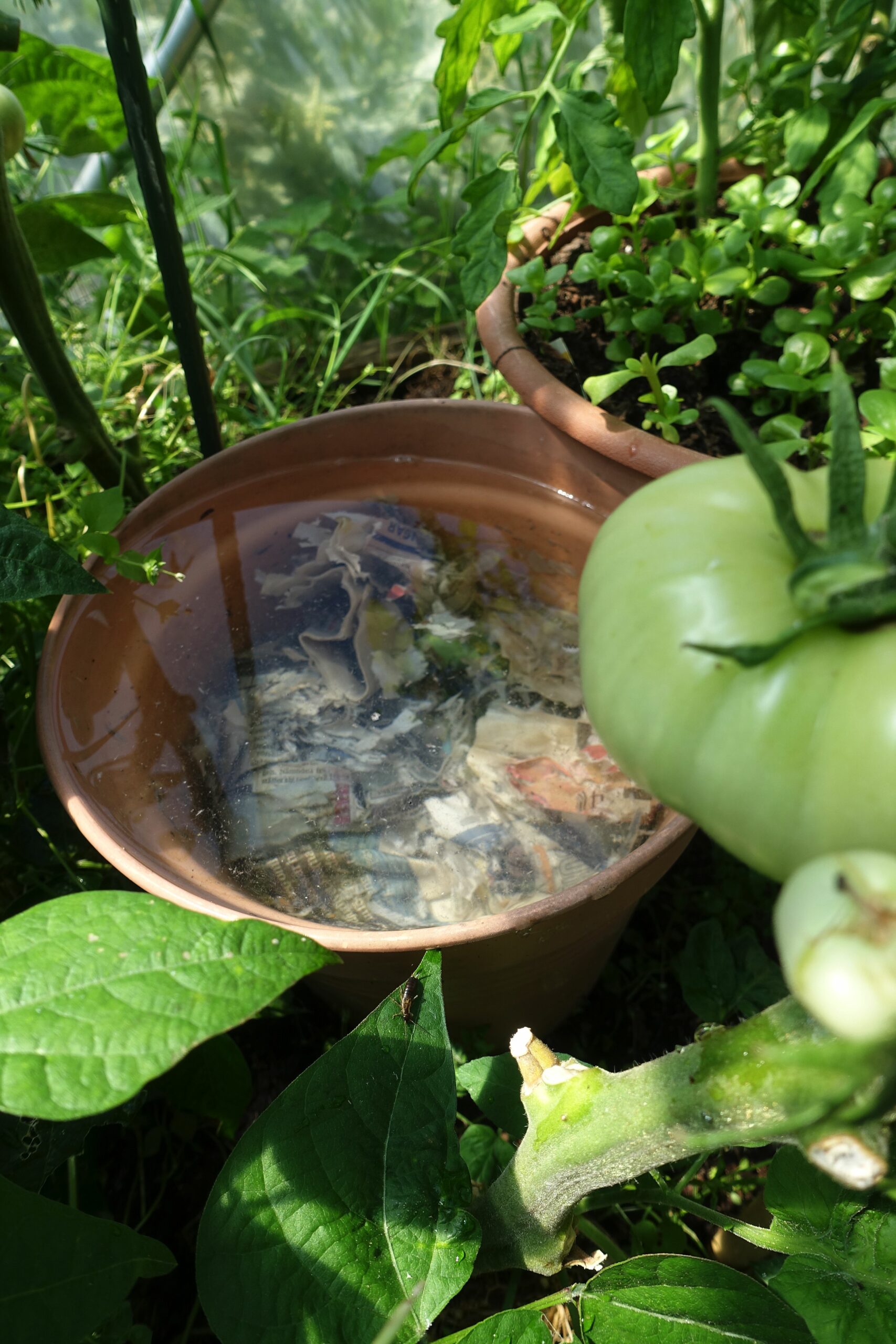
I've put a newspaper in the bottom of a pot between my thirsty tomato plants. The paper works as a plug and the water will slowly trickle out of the holes at the bottom of the pot.
3. Be smart about watering
Make sure that the soil really absorbs the water. You can use pots and buckets to water your plants if you don't have any other irrigation system in place.
More about watering:
- Drip irrigation is a great tool that you can use in your greenhouse and your beds outside.
- Water your beds with a watering can rather than a sprinkler.
- Water at night to prevent the water from evaporating (especially on sunny days.)
- Use a LOT of water in your regular beds, raised pallet collar beds and pots. Wait a few minutes after adding the water and then put one finger in the soil to make sure that the soil absorbed the water properly. Add more if needed.
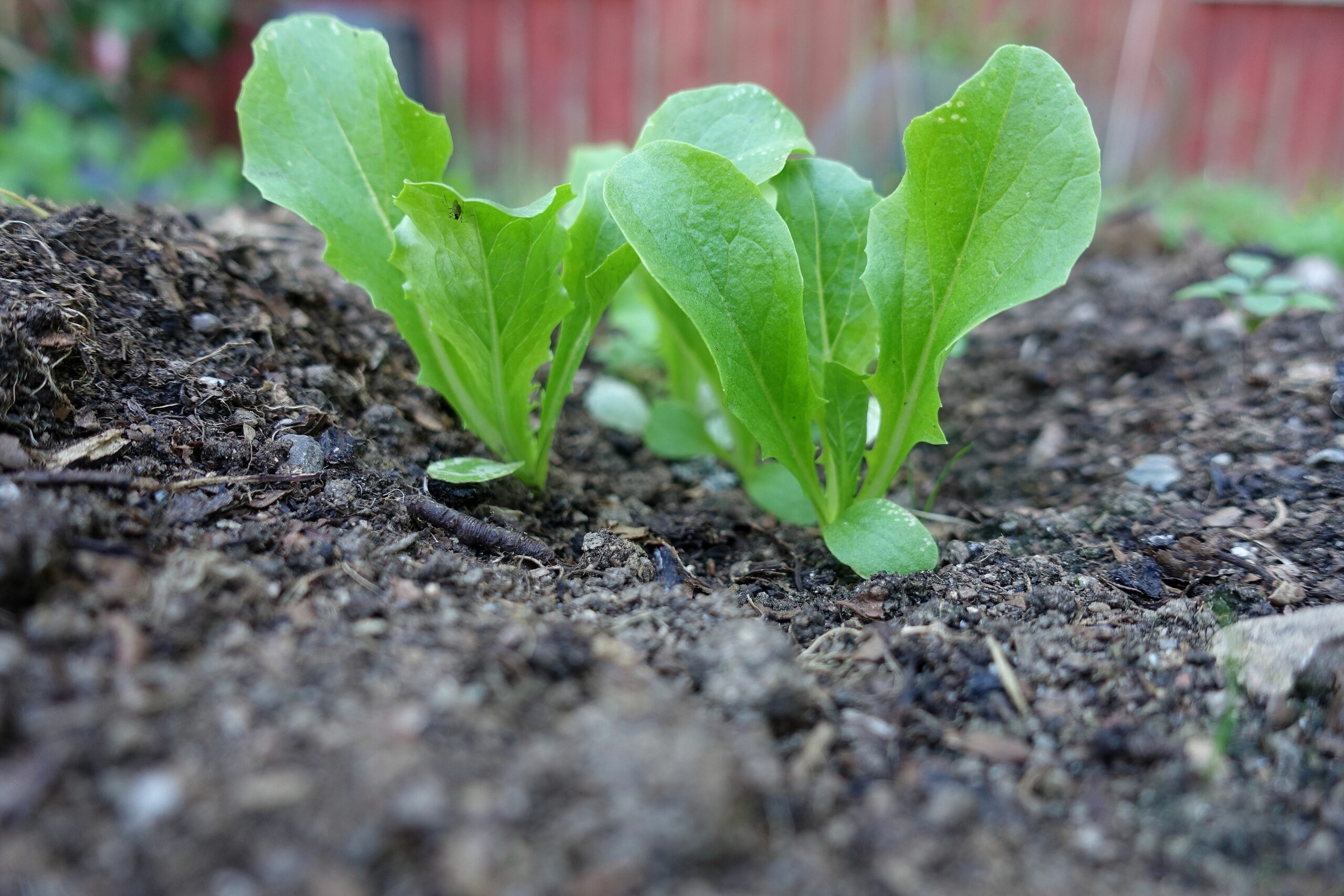
I direct-sowed lettuce here in a little ditch in one of my beds. It's very easy to water this spot and the water stays where the plants are growing. Perfect!
4. Grow in the "trenches"
Sow and plant between the ridges in your beds. These little trenches are very easy to water with a watering can and the soil here will stay moist.
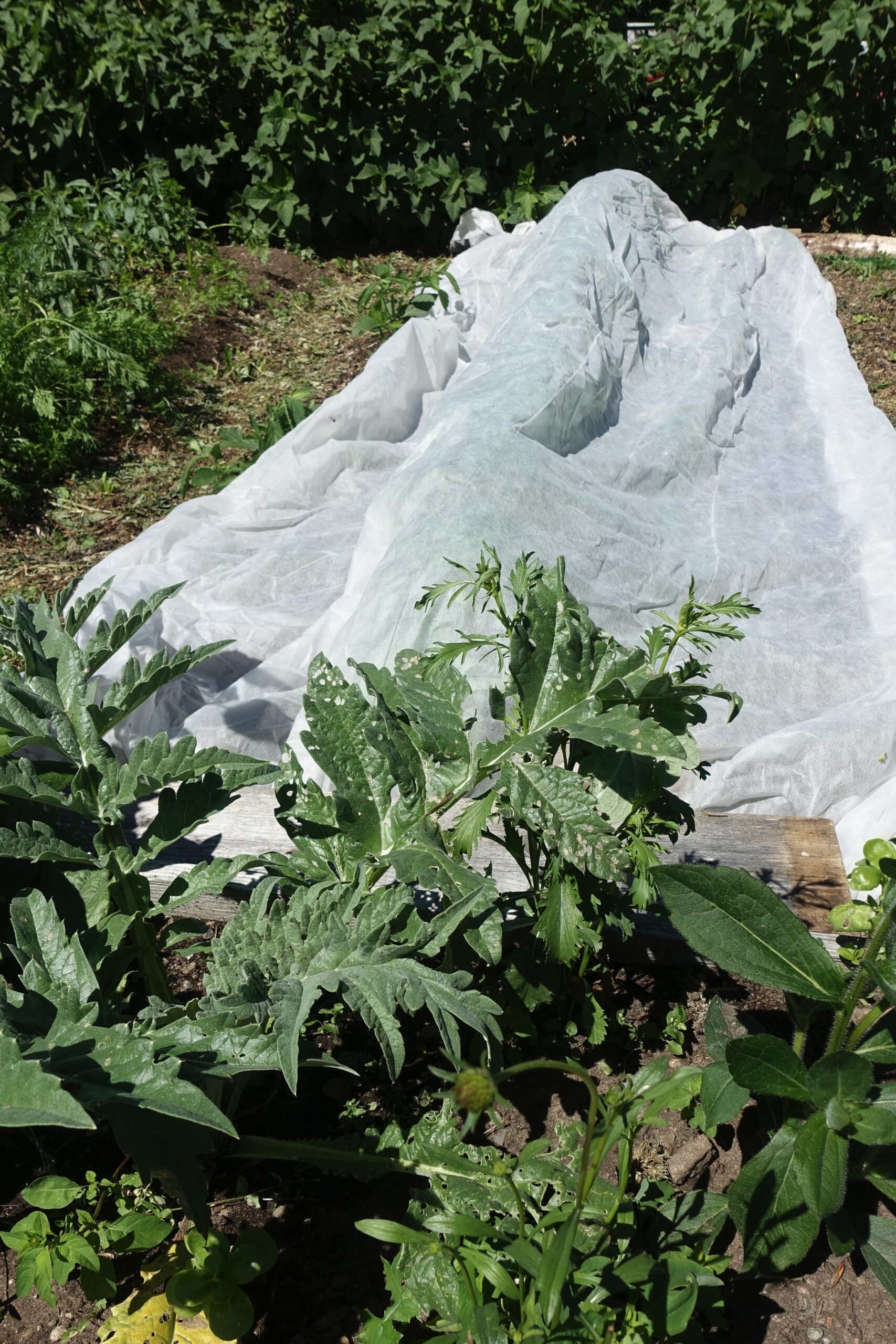
I'm growing summer carrots underneath this row cover. A row cover is the perfect tool if you're planning on growing vegetables in dry conditions. The fabric will help keep the water in the soil on hot days like these.
5. Protect your vegetables!
Make sure to protect the vegetables growing in sunny spots in your garden by adding a row cover or some thin fabric on top. This will help the soil stay moist and protects the plants from the strong sun.
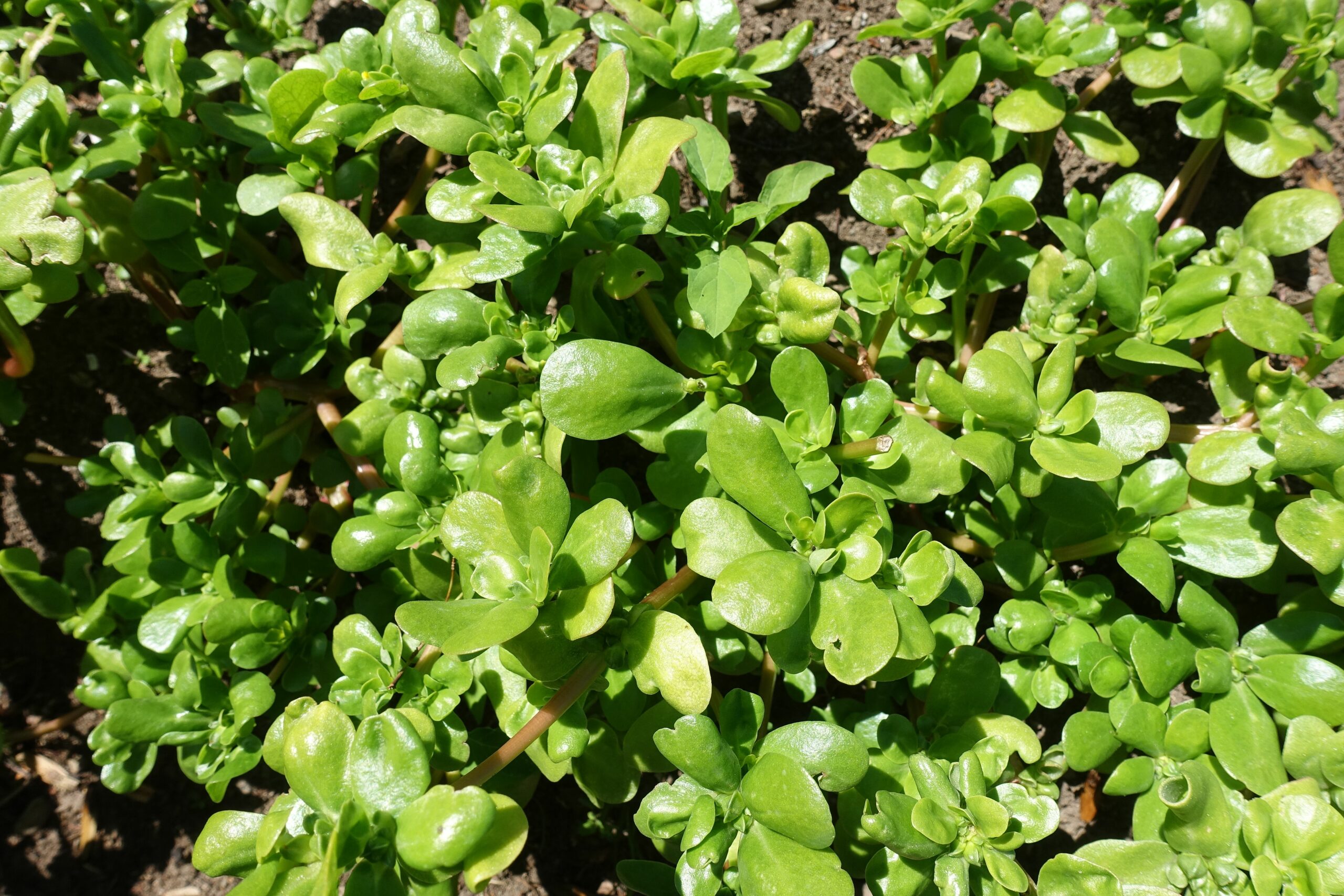
Purslane actually grows very nicely on these warm and dry days. They don't need as much water as for example lettuce.
6. Prioritize!
We can't grow everything we want when it's really hot and dry outside. So, try to think about which vegetables you want to go for. It's really difficult to succeed with thirsty vegetables like lettuce, turnip, corn and broccoli if the soil is too dry. The vegetables will grow slowly and the drought can affect the taste too. This is especially true for lettuce and turnip. So, try to find a few favorites and let go of your expectations for the rest. Prioritizing is everything when you're growing vegetables in dry conditions!
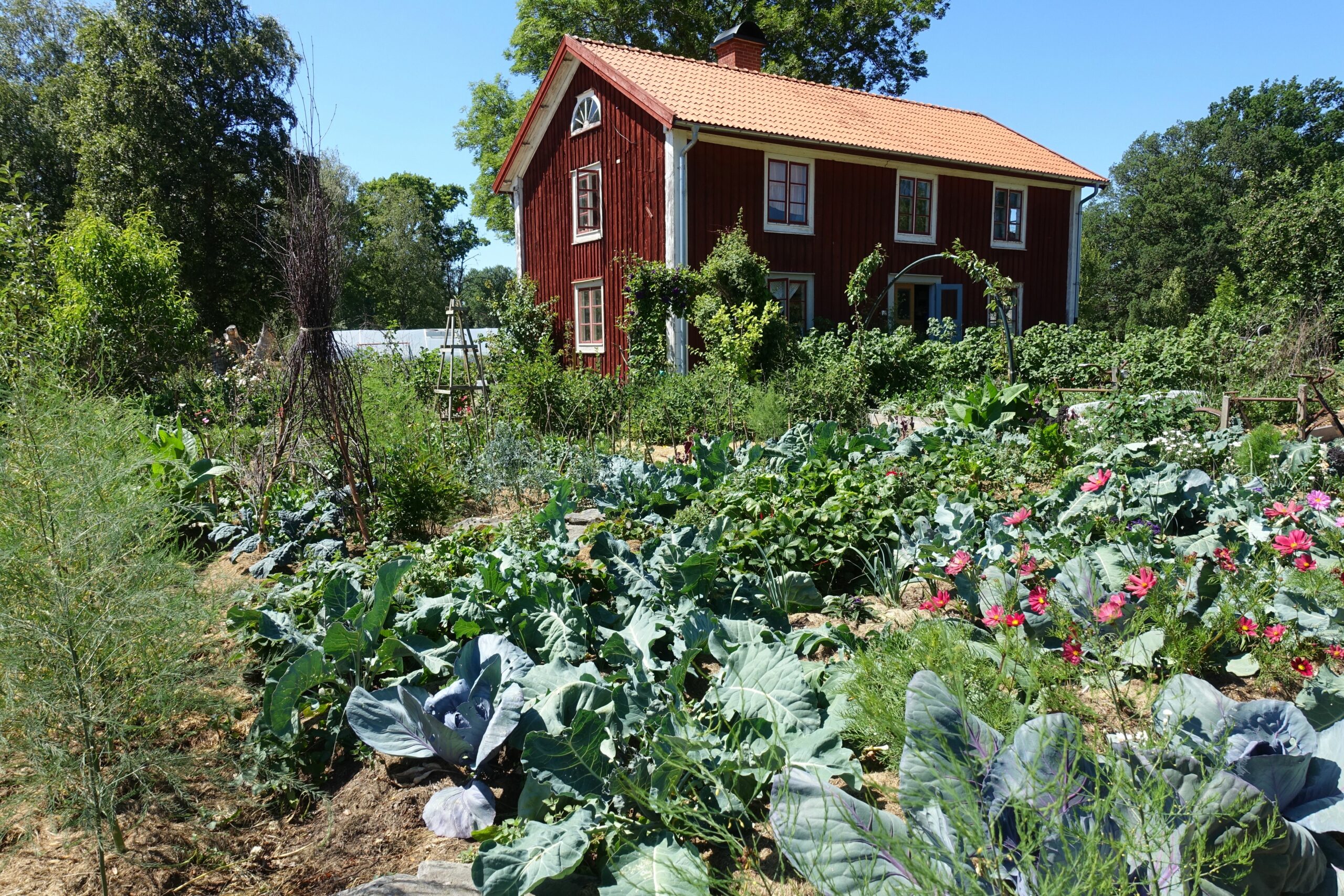
It's not over yet! With mulch, careful watering and a little bit of luck, vegetables can continue growing even during a dry spell.
More about growing vegetables in summer:
Feel free to check out other articles about my garden here on the blog. It doesn't matter if you're growing vegetables in raised beds, on your balcony or out in the open field. I write about everything from self-sufficiency to flower gardens for both beginners and seasoned gardeners.
/Sara Bäckmo
19. July 2021

Leave a Reply
You must be logged in to post a comment.